Home inspections in Conifer.
Conifer is the next community south of our Evergreen base, and about a thousand feet higher. More snow, more wells, more septic systems: here is what that means for an inspection.
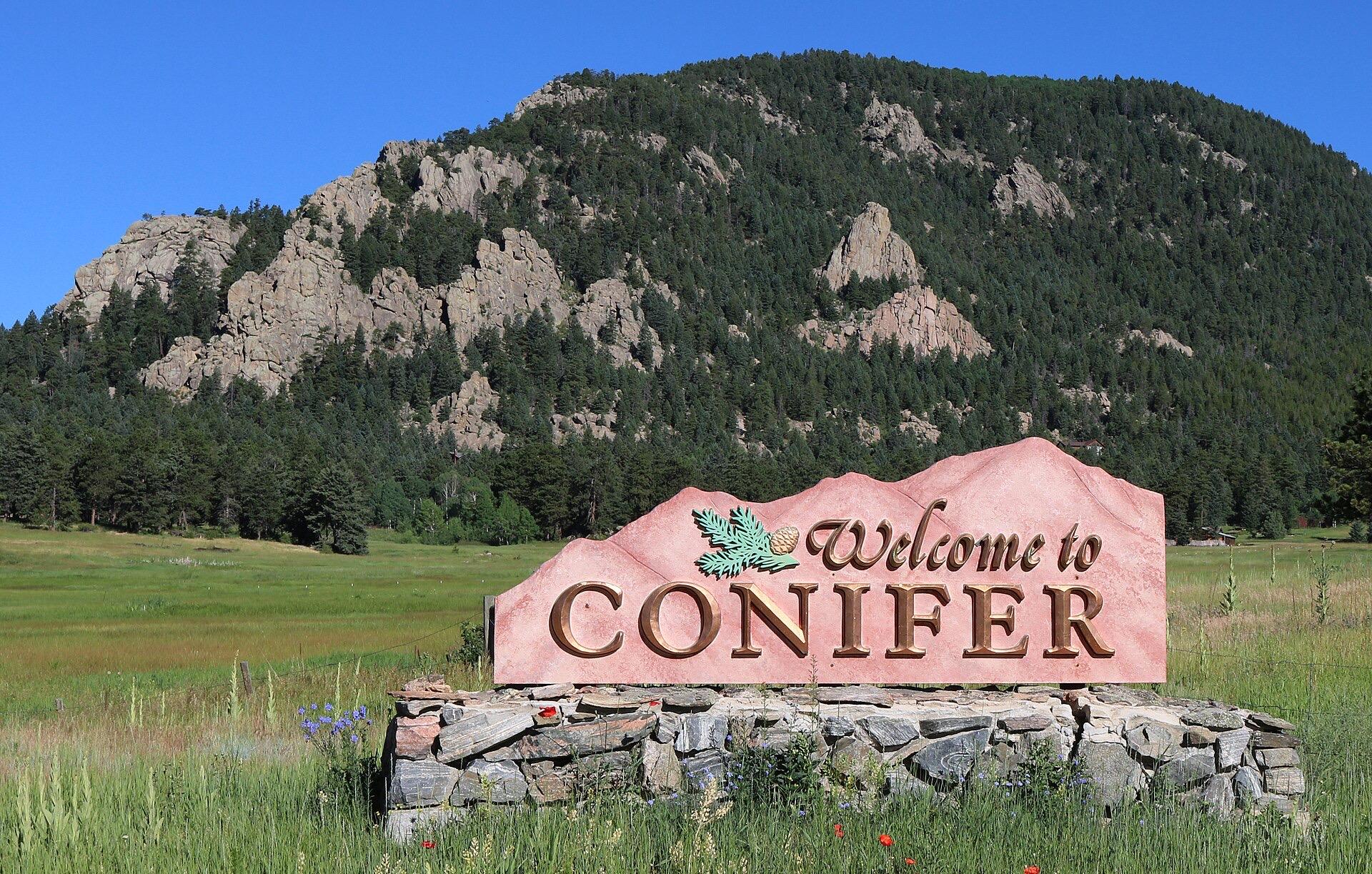
- County
- Jefferson County
- Who issues permits
- Unincorporated — Jefferson County issues the building and septic permits
- Water and sewer
- Mostly private wells and septic systems
- Septic at sale
- County use permit required before a septic-served home is sold
What’s different about a Conifer house
Conifer is an unincorporated community at about 8,200 feet. Elevation and distance from city utilities shape most of what’s worth checking.
The well is part of the house
Many Conifer homes draw from a private well drilled into fractured granite, where a few gallons a minute is common and less than one is not rare. Jefferson County’s mountain-area rules call for water storage when a well makes under one gallon a minute. Ask for the well permit and any yield test, and order your own if the records are thin.
A septic permit comes with the sale
Jefferson County requires the owner to obtain a use permit before a septic-served home is sold, based on an evaluation by a county-licensed use-permit inspector. Under the 2026 regulations only systems installed and approved less than a year before closing are exempt.
Snow load roughly doubles
The county’s minimum roof snow load is 30 pounds per square foot below 6,500 feet, 57 at 8,000 and 68 at 8,500. Once the ground snow load passes 70 pounds per square foot, the county requires the structure to be engineered. Unpermitted decks, carports and additions are where that shows.
Wildfire and insurance
This is forest. Defensible space and ember-resistant details affect both safety and whether a home is easy to insure. Get an insurance quote during your inspection window, not after it.
What we look at closely
The whole house gets inspected. At this elevation, these parts earn extra time.
Roof framing and decks
Sagging, undersized or altered framing, deck ledgers and posts, and porch roofs that were added later.
Ice dams and attic heat loss
Staining at the eaves, insulation depth, ventilation, and bath fans that vent into the attic instead of outdoors.
Wood stoves and propane
Clearances, hearth protection, visible flue condition, and the propane tank, regulator and lines.
Well and septic, as far as we can see
Pressure tank, visible wiring and plumbing at the well, and surface signs at the tank and field. The deeper tests belong to specialists.
What a home inspection doesn’t cover
These are the add-on inspections a Conifer buyer most often needs. None of them is part of a standard home inspection, here or anywhere.
Well yield and water quality
We note the visible well equipment, pressure tank and treatment gear. A timed yield test and lab water testing are separate specialist services, and worth ordering early.
The septic use-permit inspection
That is done by a use-permit inspector licensed by Jefferson County, not by a home inspector. We note the visible parts of the system and anything that looks wrong at the surface.
Inside the flue
We check wood stoves, clearances and the visible chimney. A camera inspection of the flue (a Level 2 chimney inspection) is a chimney sweep’s job.
Engineering opinions
We report what we see — cracks, movement, sagging, undersized framing — and say when a structural engineer should take it further. We don’t size beams or certify a structure.
What you can book
Full home inspection
Every major system, a walkthrough on site, and a photo report the same day.
Radon testing
A 48-hour continuous monitor, alone or alongside the inspection.
Sewer scope
A camera through the main sewer line, from the house to the street.
Commercial inspection
Scoped and quoted for the building. Written proposal first.
Go deeper
Nearby communities we cover
- Aspen Park — the commercial centre along US 285
- Pine and Buffalo Creek — farther up the US 285 corridor
Conifer, answered.
Do you inspect wells and septic systems in Conifer?+
We inspect what’s visible: the pressure tank, the equipment at the wellhead, and surface conditions at the septic tank and field. A timed well-yield test, lab water testing and the county’s septic use-permit inspection are done by specialists. We’ll tell you which ones the house needs.
Can you inspect in winter?+
Yes, year-round. Deep snow can hide a roof surface, a deck or the grading, and when it does the report says exactly what couldn’t be seen so you can decide whether to have it looked at again.
Is radon a concern this high up?+
Yes. About half of Colorado homes test above the EPA action level, and mountain homes are no exception. A 48-hour monitor can run alongside the inspection.
- Jefferson County Building Safety — Table R301.2.3 Snow Load Table (2024 Building Code Supplement)
- Jefferson County Public Health — Onsite Wastewater Treatment System Regulations, effective June 15, 2026 (Section 9, Use Permits)
- Jefferson County — Use Permit Program
- CDPHE — Half of Colorado homes have elevated radon levels
County and utility rules change. Checked November 2026; confirm current requirements with the agency before you rely on them for a closing.
Book the inspection. Know the house.
Pick a date and time — you'll get a confirmation email right away, and we'll reach out only if something needs to change.